

Dialogic Tarot School, w15
The Chariot and the Soul: Plato’s Psychology of Inner Conflict

Plato gives us one of the most enduring images of the human psyche: a chariot pulled by two horses, driven by a charioteer who is trying—often desperately—to keep them moving in the same direction.
It appears in the dialogue Phaedrus, where Socrates, instead of offering a dry definition of love or soul, turns to myth. The result is not a theory in the modern sense, but a living diagram of inner experience….And it still works today.
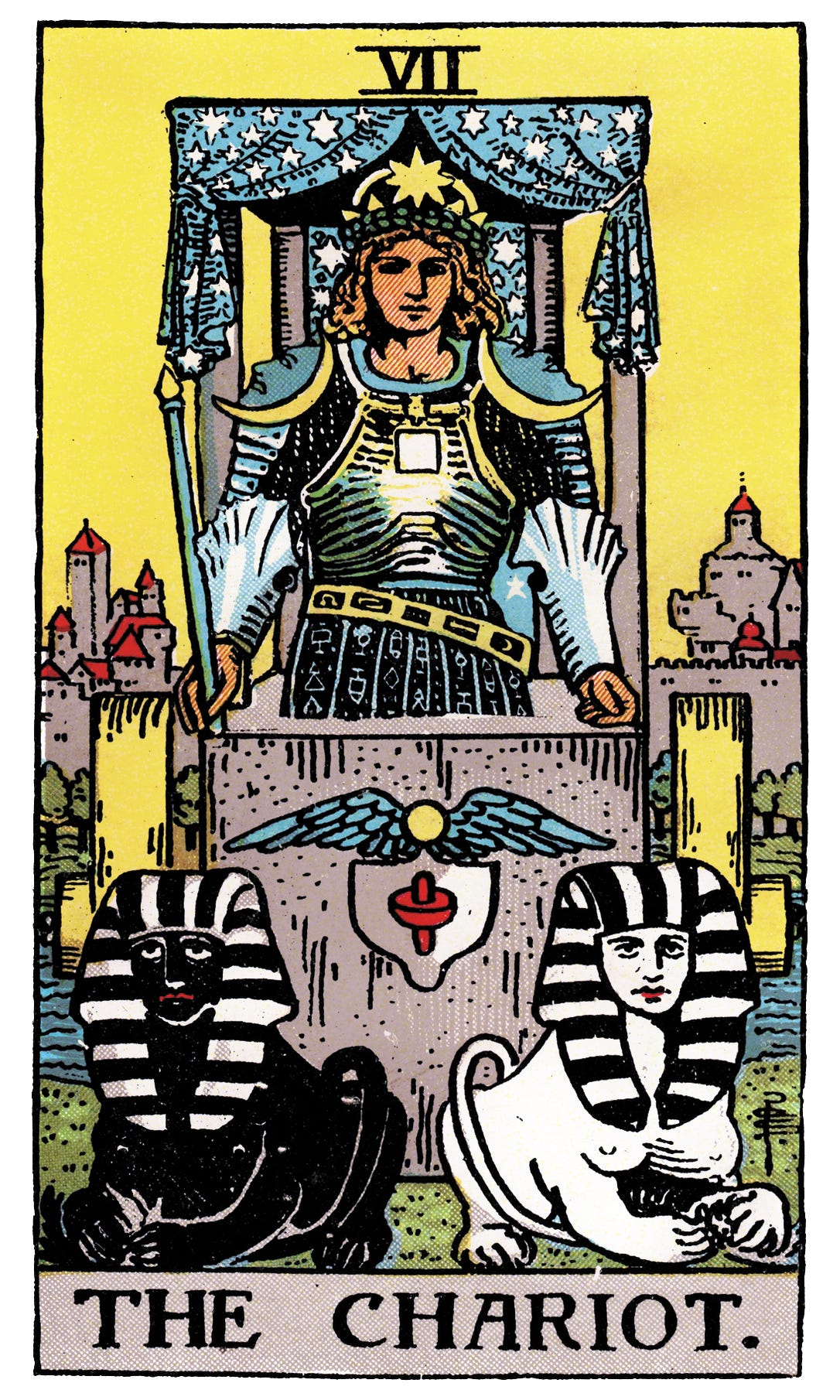
The structure of the soul
Socrates describes the soul as a winged chariot:
A charioteer (reason)
Two horses (competing drives)
A struggle over direction, balance, and ascent
The charioteer is not a ruler in the modern authoritarian sense. He is more like an anxious intelligence—trying to see clearly while everything he depends on is moving.
The horses are not “good” and “evil” in a simplistic moral sense. They are forces with different orientations.
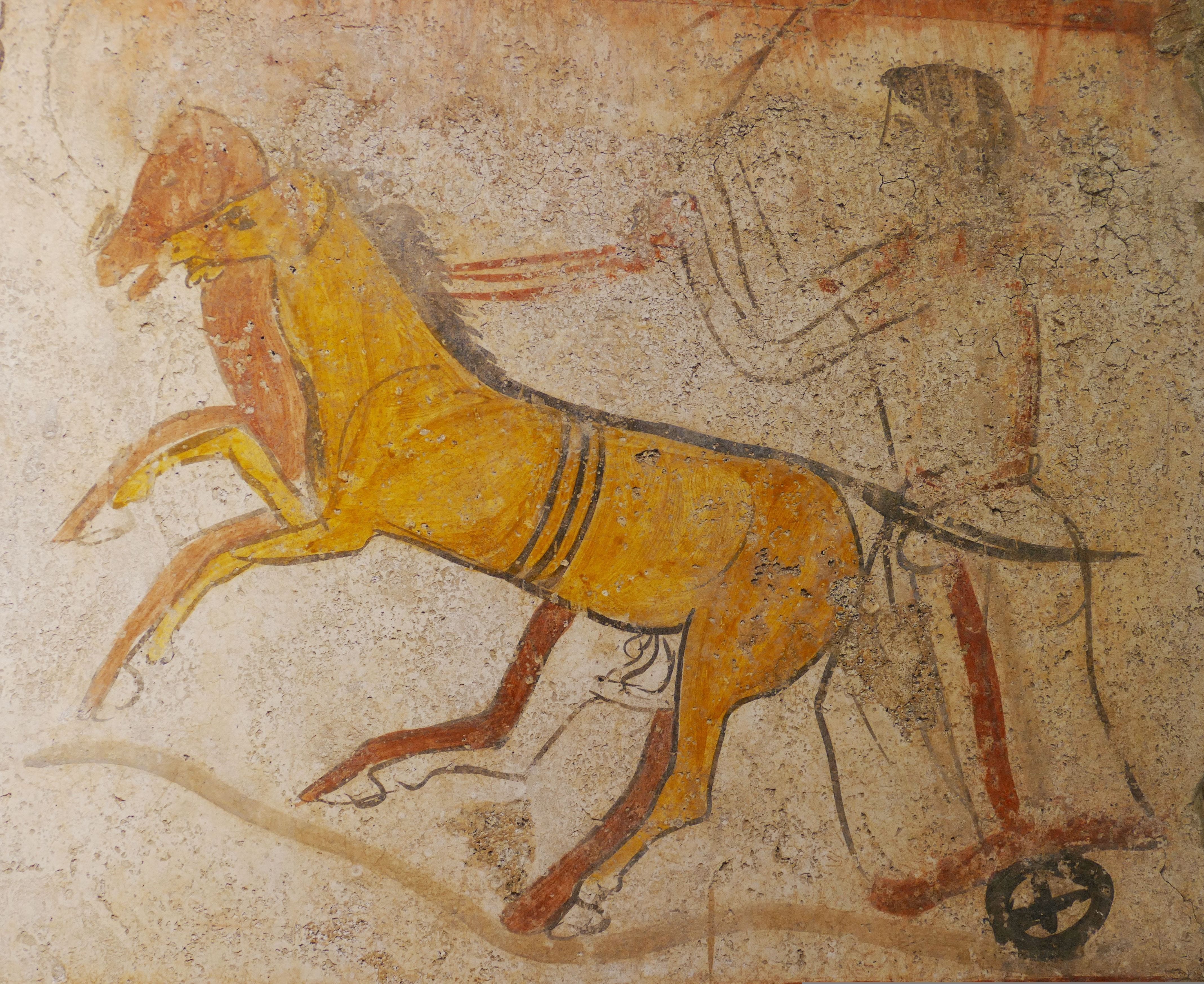
The two horses
The white, noble horse: order, dignity, aspiration
One horse is disciplined, responsive, and capable of shame and honor. It wants alignment. It responds to training. It can be led upward.
This is the part of us that wants coherence:
to become better
to act meaningfully
to live in alignment with something higher than impulse
It is not free of desire—but it is shaped desire.
The black, unruly horse: appetite, impulse, resistance
The other horse resists guidance. It pulls toward immediacy: pleasure, gratification, avoidance of restraint.
It is not “evil” so much as unintegrated energy—raw motion without reflection.
It does not ask “is this meaningful?”
It asks “do I want it now?”
The charioteer’s problem
The most important figure is not either horse—it is the charioteer. Reason in Plato is not omnipotent but outnumbered…
It must:
interpret signals
anticipate resistance
hold direction under pressure
prevent collapse into fragmentation
This is why the metaphor still feels psychologically accurate. Conscious intention may be sovereign but it feels managerial….Constantly negotiating with forces it does not fully control. Socrates’ metaphor depicts the soul not as simple unity, but as a complex system of tensions.
Why the chariot moves upward—or doesn’t
In Socrates’ myth, the chariot is capable of ascending toward truth and divine reality. But this depends entirely on coordination.
When the horses are aligned, the soul rises.
When they fight, the chariot stalls or crashes.
In his view, ascension or descent are not a form of moral punishment…They are a structural consequence of how the soul is built.
The soul does not “fail” because it is inherently bad.
It may descend to lower frequencies because forces are pulling in incompatible directions at the same time, and the charioteer loses full control.
A tarot reflection: The Chariot
It is difficult not to hear echoes of this in the tarot card The Chariot.
Where Plato gives us metaphysics, tarot gives us symbolic psychology. Both describe movement under tension.
In tarot terms, The Chariot is not about smooth control—it is about:
holding opposites without collapsing into either
steering through contradiction
maintaining direction while internally divided
Reading the myth today
If we translate Socrates into modern language, the chariot might look like this:
The charioteer = executive function, reflective awareness, decision-making
The noble horse = values, long-term orientation, integrity
The unruly horse = impulse systems, avoidance, desire, fear, craving
The struggle is to train relationship between the two horses, and subject them to the will of consciousness.
A soul without the unruly horse would have no drive.
A soul without the noble horse would have no direction.
And a soul without the charioteer would have no coherence.
The deeper point
Plato is not describing a flaw in human nature.
He is describing the condition of consciousness itself:
to be aware is to be divided; to act is to negotiate that division.
The question the Chariot poses hence becomes:
Who is holding the reins—and how often do they remember they are not alone in the chariot?
This Week in Dialogic Tarot School
Download the workbook below and email me your findings and reflections at ritarottelbac@gmail.com
Looking forward to receiving your work.
